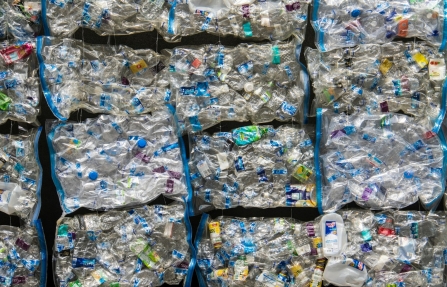
The PPWR demands more than understanding the rules: it's about conformity assessment, materials and recyclability in practice. Discover where companies get stuck today.
With the arrival of the PPWR (Packaging and Packaging Waste Regulation), it is not only the rules on packaging that are changing, but also the way responsibilities are divided along the chain.
Since 1 July 2026, the European approach to Listeria monocytogenes in ready-to-eat products has shifted from 'demonstrably safe enough' to 'absent, unless proven otherwise'. For anyone placing RTE products on the market, this is not a minor detail, but a new starting point.
With the introduction of the Empowering Consumers for the Green Transition (ECGT), the role of sustainability claims is shifting fundamentally. Where such claims used to be primarily a marketing tool, they are now becoming a compliance responsibility.
The PPWR (Packaging and Packaging Waste Regulation) is the new European regulation on packaging, which will come into force on 12 August 2026. With this regulation, Europe aims to achieve a fundamental shift: less packaging waste, more circularity and stricter control of materials and claims.
Sustainability claims have become an important commercial tool in recent years. At the same time, this has led to an increase in vague, exaggerated or hard-to-verify communication. With the introduction of the ECGT Directive (Empowering Consumers for the Green Transition, 2024/825), Europe aims to put a stop to this.
Traceability is the backbone of any food safety system. Discover the legal framework, the practical approach and the link with risk analysis and audits.
IFS Local Check is intended for small food businesses with a single production site, no outsourced processes and no complex management structures. This includes, for example, family businesses, artisanal producers, cooperatives or traditional processors with limited production volumes.
The Dutch PAL rules have been tightened since 1 January 2026: warnings are now only permitted if they are substantiated by a risk-based assessment. Do you export to the Netherlands? Then it is essential to have your prevention, cleaning/validation and risk analysis in order.