Meat
Listeria: from 1 July 2026, zero becomes the standard
Read moreSince 1 July 2026, the European approach to Listeria monocytogenes in ready-to-eat products has shifted from 'demonstrably safe enough' to 'absent, unless proven otherwise'. For anyone placing RTE products on the market, this is not a minor detail, but a new starting point.

PPWR 2026: what changes for your business?
Read moreThe PPWR (Packaging and Packaging Waste Regulation) is the new European regulation on packaging, which will come into force on 12 August 2026. With this regulation, Europe aims to achieve a fundamental shift: less packaging waste, more circularity and stricter control of materials and claims.

ECGT is coming: from sustainability claim to burden of proof
Read moreSustainability claims have become an important commercial tool in recent years. At the same time, this has led to an increase in vague, exaggerated or hard-to-verify communication. With the introduction of the ECGT Directive (Empowering Consumers for the Green Transition, 2024/825), Europe aims to put a stop to this.

Intrusion testing in the food sector: how well protected is your business?
Read moreAt AMNorman, we have been carrying out intrusion tests in the food sector for years to expose vulnerabilities in companies' physical security.

IFS Local Check: the pragmatic step towards greater food safety and trust
Read moreIFS Local Check is intended for small food businesses with a single production site, no outsourced processes and no complex management structures. This includes, for example, family businesses, artisanal producers, cooperatives or traditional processors with limited production volumes.

New PAL rules in the Netherlands 2026: what this means for allergen management
Read moreThe Dutch PAL rules have been tightened since 1 January 2026: warnings are now only permitted if they are substantiated by a risk-based assessment. Do you export to the Netherlands? Then it is essential to have your prevention, cleaning/validation and risk analysis in order.

Deep-frozen, frozen, refrigerated, or at room temperature? These are the main differences
Read moreWe store food in various ways: refrigerated, frozen, deep-frozen, or at room temperature. Each of these storage methods has specific characteristics, applications, and rules. So what exactly is the difference between frozen and deep-frozen? How do you thaw products correctly? And why is it risky to refreeze thawed products? Read about it in this blog.

Food safety culture: a strong foundation for better safety
Read moreIn the world of food safety, it is no longer just about strict rules and quality control.
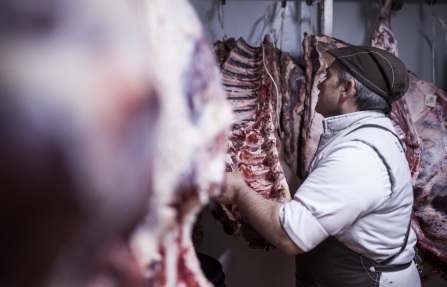
The role of a Welfare Officer
Read moreIn a world where animal welfare is receiving increasing attention, no slaughterhouse can ignore it any longer.
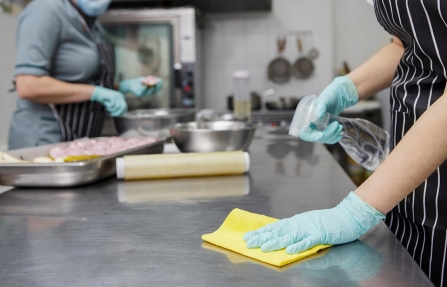
Kenosan Lactic remains approved: these are the officially validated alternatives for knife disinfection
Read moreKenosan Lactic is still produced and approved. Discover what the FASFC advisories on Proculac and Inspexx 210 mean for knife disinfection in your slaughterhouse or cutting plant.