Labelling

ECGT and green claims: what does this mean for your business?
Read moreWith the introduction of the Empowering Consumers for the Green Transition (ECGT), the role of sustainability claims is shifting fundamentally. Where such claims used to be primarily a marketing tool, they are now becoming a compliance responsibility.

ECGT is coming: from sustainability claim to burden of proof
Read moreSustainability claims have become an important commercial tool in recent years. At the same time, this has led to an increase in vague, exaggerated or hard-to-verify communication. With the introduction of the ECGT Directive (Empowering Consumers for the Green Transition, 2024/825), Europe aims to put a stop to this.

New PAL rules in the Netherlands 2026: what this means for allergen management
Read moreThe Dutch PAL rules have been tightened since 1 January 2026: warnings are now only permitted if they are substantiated by a risk-based assessment. Do you export to the Netherlands? Then it is essential to have your prevention, cleaning/validation and risk analysis in order.

Identification marks: abbreviation 'EC' changes to 'EU'
Read moreDelegated Regulation (EU) 2024/1141 of 12 June 2024 provides that the abbreviation 'EC' must be replaced by 'EU'.

Differences between B2B and B2C labelling
Read moreThe distinction between B2B and B2C in labelling has major consequences for the way information must be shared. It also determines the obligations of producers and distributors in the food sector.

Labelling of pre-packaged food in retail
Read moreLabels on pre-packaged products are an important source of information for consumers. Since December 2014, European Regulation (EU) No 1169/2011 on the labelling of foodstuffs has applied.
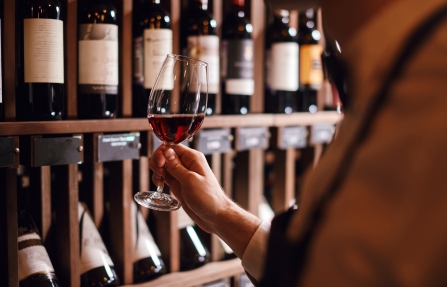
New labelling requirements for wine
Read moreWine products produced and labelled from 8 December 2023 onwards must comply with new labelling requirements. For other alcoholic beverages, this is not yet mandatory.
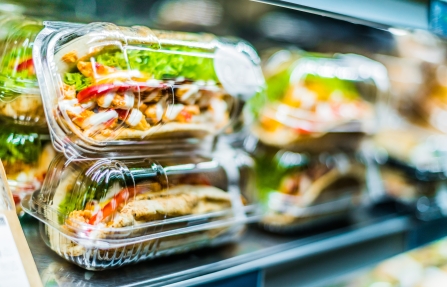
'Use by' or 'best before'?
Read moreWhat is the difference between 'best before' and 'use by'?
We regularly receive questions about the durability dates on the label of a pre-packaged product. The manufacturer is required to place a durability date on every food product. A distinction is made between 'best before (BB)' and 'use by (UB)'.
When do I use 'UB' and when 'BB'? Is a durability date always mandatory? And what about stating time and temperature?
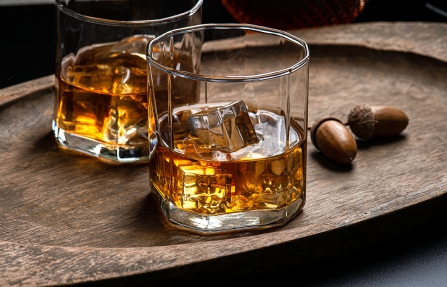
New legislation on the labelling of spirit drinks (rum, cognac, etc.)
Read moreSince 25 May 2021, new EU legislation has applied to the definition, description, labelling and presentation of spirit drinks such as rum and cognac.

Product information under the microscope
Read moreResearch shows that 20%, or 25,000 product data sheets, contain errors or omissions.