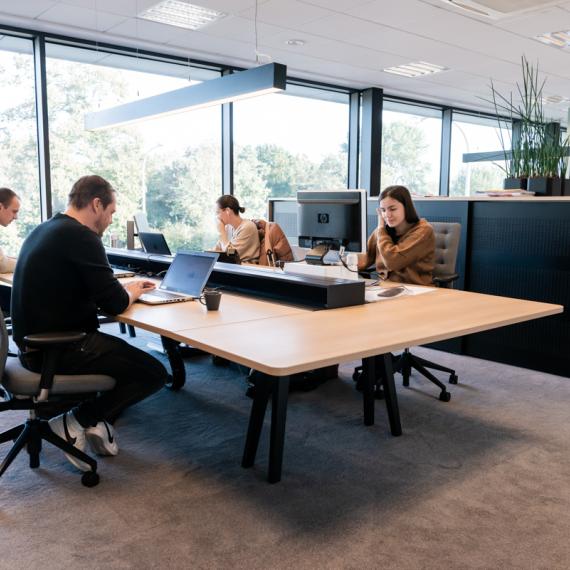
The deliberate choice for outsourcing
Outsourcing is a topical theme within quality departments, especially now that staff shortages are increasing and vacancies are becoming difficult to fill. As a knowledge and competence partner, AMNorman supports organisations in managing their quality management systems, among other things by providing training, setting up new systems and auditing existing processes and procedures. We also offer temporary support through outsourcing.
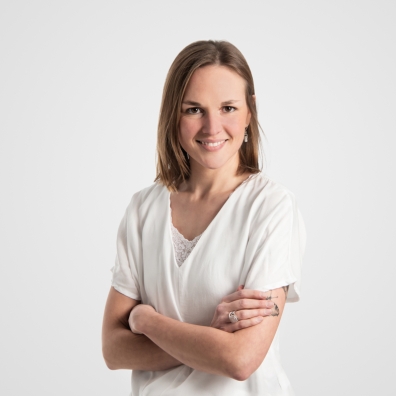
Veerle De Clippeleir
Veerle, a Normanist for over 10 years, shares her experience, vision and bold perspective on this topic.
Could you briefly introduce yourself?
Veerle: "When I introduce myself to a company, I often say that I prefer not to call myself a consultant. Outsourcing is about working together for a certain period, during which you truly become part of an organisation. On paper I'm external, but in practice I become a 'colleague of'."
Could you explain what your work actually involves?
Veerle: "In short, outsourcing provides temporary support to businesses, ranging from 3 months to even several years, either part-time or full-time. In practical terms, it involves taking on tasks and responsibilities within quality departments and existing quality systems.
My support consists of experience and advice, which means I can be deployed quickly and work independently, while at the same time becoming part of the organisation's team. Initially, I focus on the company's immediate needs, but I also look further ahead to possible improvements within their quality management system.
Although my experience lies mainly with food companies, I do not limit myself to one sector. At AMNorman, we invest in the development of our Normanists by giving them the opportunity to gain in-depth expertise and broad experience across different companies and sectors. As a result, over the years we have built up various teams specialising in the different sectors in which we operate.
Businesses that choose outsourcing benefit from continuity without the need for an extensive onboarding process. The clearer the role and requirements are, the faster an outsourcing profile can get started. Moreover, AMNorman brings a unique combination of broad experience and in-depth expertise, which is a major advantage for our clients."
Given your broad experience in outsourcing, do you see recurring patterns across different companies?
Veerle: "Yes, I increasingly see rising workloads within quality departments, which can lead to staff burnout and structural staff shortages, creating even more pressure. I work closely with quality managers who struggle to keep their quality system running, especially at a time when businesses often have to deal with cost cutting.
I increasingly get the feeling that outsourcing is being used reactively rather than proactively, driven by the growing pressure on continuity. Quality management is also about continuous improvement and change. Both aspects call for a different approach. This is where I believe in the power of temporary partnerships as a deliberate choice for outsourcing."
What tip would you give to companies dealing with this pressure and tension?
Veerle: "My mantra, and by extension my work, is about creating awareness. What is in your awareness, you can transform. My tip, then, is this: focus on creating the conditions and a culture in which people can work proactively. This is embedded in almost every standard and is about commitment, which is often the first chapter of a standard.
When change can be seen as a normal part of the system rather than a crisis, there is room for growth and development. Conscious leadership and commitment to carrying quality through the entire organisation are key to improvement and change. As a result, quality can become an expression of organisational development, in which reactivity transforms into proactivity and even creativity.
Although it may sound a little unusual, I believe that the path towards more inspiration within organisations and their quality departments has long been underway. Standards, too, have evolved in recent years to align more closely with this, for example with Food Safety Culture."
Thank you for the interview, Veerle.